Forensic Structural Engineering
Storage Tank Failures: Four Causes Forensic Engineers Investigate
October 28, 2026
Schedule a Consultation >
Contact Us
Forensic Structural Engineering
October 28, 2026
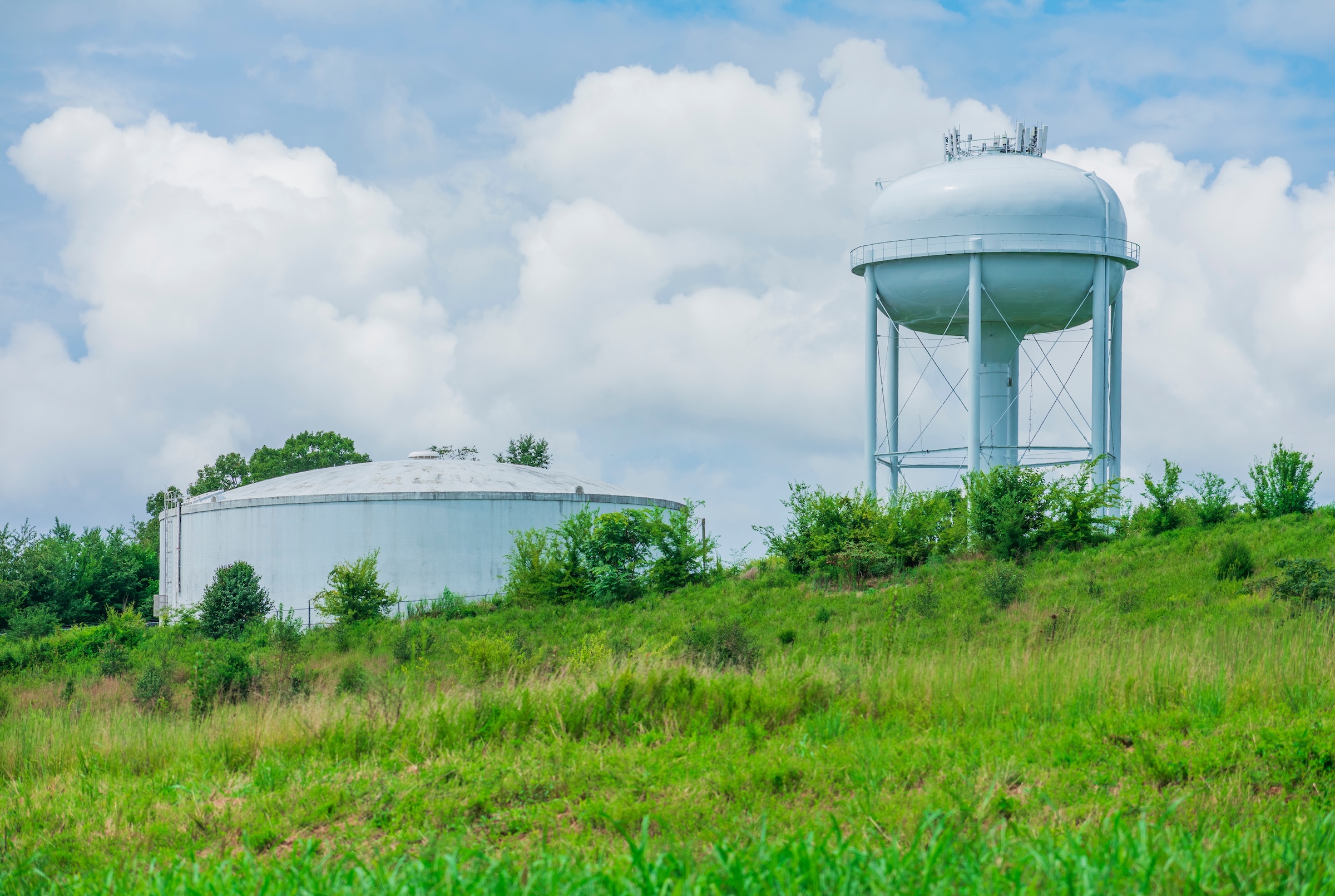
Storage tank failures are uncommon. That said, when one happens, the consequences can be significant because of the loss of whatever the tank was holding. Forensic investigations of tank failures commonly focus on four broad categories of cause:
Each cause typically leaves physical evidence and a documentary record. An engineer considers both the physical evidence and documentary record together in an effort to evaluate what caused the failure (and when the condition likely began).
Like most failures we investigate, tank matters come down to questions of causation and duration. That is, what caused the failure, and when did it occur? If you want the general picture of how forensic engineers approach those questions, start with our post on what a forensic structural engineer actually does. This article is about how that work applies to aboveground storage tanks.
These disputes usually focus more on the release than the tank itself. That’s because a failed tank can release its contents onto the ground, into a waterway, or even into the air as a fire.
In these cases, questions follow quickly. These questions center on how much was released, whether the containment performed, what the cleanup involves, and how responsibility is shared among the parties involved.
To answer these questions, a forensic engineer must first determine why the tank failed in the first place. That’s why we treat storage tank failures and environmental releases as a single practice area. The failure analysis and the release analysis tend to be one investigation.
Steel in contact with stored product, water, and the atmosphere loses thickness over time, which is why in-service inspection programs exist to monitor it. API 653 is the industry standard for inspection, repair, alteration, and reconstruction of aboveground welded steel tanks once they’re in service. Among other things, it addresses the types of inspection, how measured thickness is evaluated, and inspection intervals that depend in part on measured corrosion rates.
When corrosion is involved, the forensic question usually goes beyond “Did it corrode?” to “What did the records show, and when did the records show it?” Dated thickness readings, when compared across time, can help bracket when a condition developed. Depending on the case, that timeline may influence questions on ownership periods or inspection history, which counsel can then evaluate.
A welded steel tank’s shell is thin relative to its size and relies on uniform foundation support to maintain its shape. Uniform settlement is generally less of a concern than differential settlement, where one part of the tank moves relative to another.
Differential settlement can distort the shell, stress the connection between the tank bottom and the shell, interfere with floating roofs, and shift nozzles so that attached piping imposes loads the tank wasn’t designed to carry. API 653 recommends methods for evaluating measured settlement, providing a reference point for the analysis. Where they exist, prior settlement surveys and inspection reports can show how the condition developed over time.
New welded steel tanks are generally designed and built to API 650. In many investigations, though, the question isn’t the original design. Rather, it’s what changed afterward: a change in service, a repair, a nozzle addition, or equipment added over the years.
Depending on the case, engineers may look at:
The investigation is always document-driven. Establish the design basis, establish what the tank had become by the date of the failure, and compare both against the applicable standards. Modifications usually leave a dated paper trail, so you can often build an accurate timeline of how the condition developed.
Some failures happen quickly: hot work near a tank, an overfill, fire exposure from a neighboring tank, or a transfer or pressure event. Even then, the investigation may look at whether the tank’s condition played a role alongside the event. For example, did a previously weakened weld or a thinned area contribute to how the tank responded?
Engineers evaluate that question using physical evidence, which may include fracture surfaces, weld cross-sections, and thickness measurements of the remaining steel.
Whatever the cause, three engineering evaluations need to be made once the product has left the tank:
It’s always best to get a forensic engineer involved early in the process — ideally before failed components are removed or scrapped. The physical evidence (fracture surfaces, failed welds, bottom plates, corrosion patterns) and the records (inspection histories, thickness data, settlement surveys, repair and modification files) are read together, and each tells the engineer what to look for in the other.
We’ve written more broadly about when to bring a forensic engineer into a case. For tank matters, the practical answer is usually “before anything is scrapped.”
We work on these matters for owners, operators, insurers, and attorneys. The analysis is simple and consistent, no matter who we’re working for: the steel, the records, and the applicable standards either line up, or they don’t.
If you’re involved in a dispute related to a storage tank failure or environmental release, we’re here to help. Get started by scheduling a consultation.
API 653 is the American Petroleum Institute standard covering inspection, repair, alteration, and reconstruction of aboveground welded steel storage tanks after they enter service. In a failure investigation, it’s commonly one of the reference documents for how an in-service tank was inspected, evaluated, and maintained.
API 650 covers the design and construction of new welded steel storage tanks. API 653 covers the tank after it’s in service: inspection, evaluation, repair, and alteration. In a failure investigation, API 650 generally speaks to how the tank was built, and API 653 to how it was inspected and maintained afterward.